Industrial equipment
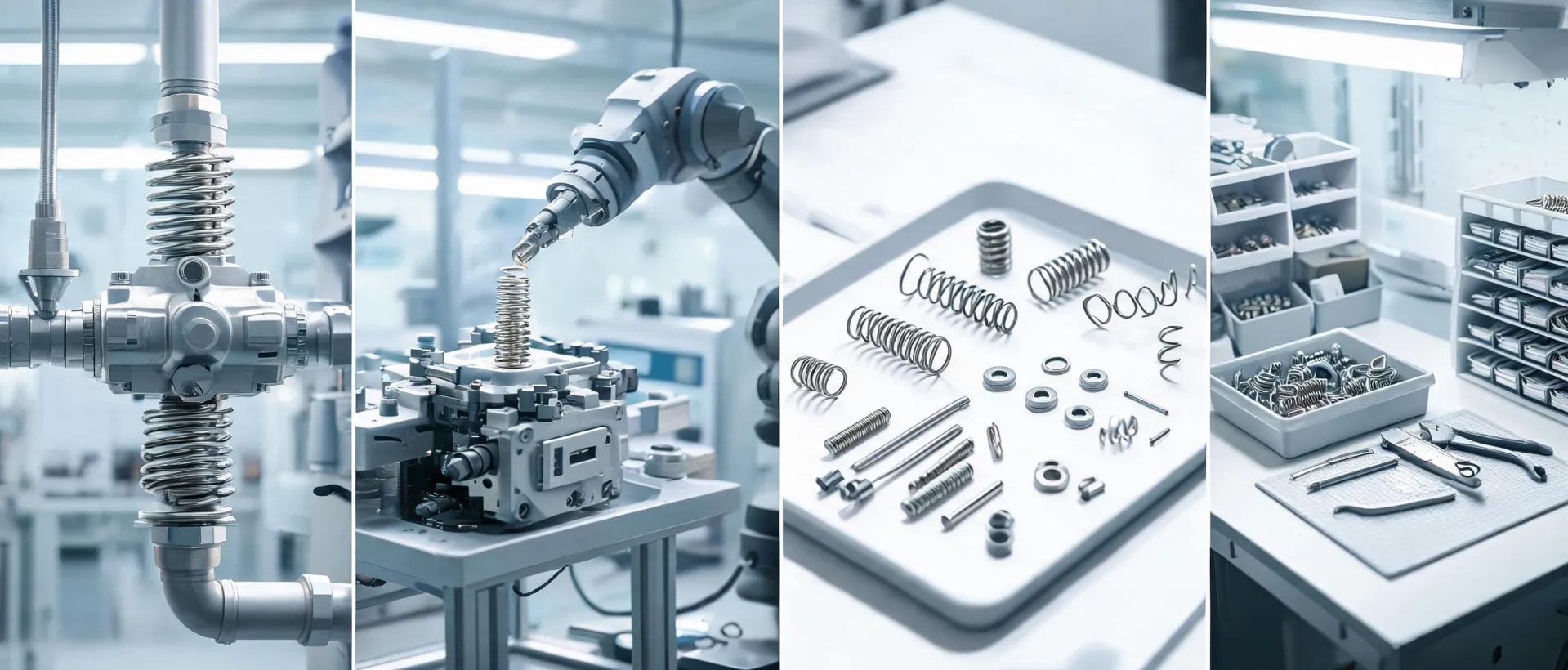
Compression springs, torsion springs and wire retainers used in guards, latches, fixtures and small motion assemblies.
Application solutions
Springs are small parts with a large effect on uptime and product feel. This page organizes common buying contexts around the application evidence that matters most: working travel, installed height, cycle expectation, exposure, finish and reorder cadence.
Vertical grid
Compression springs, torsion springs and wire retainers used in guards, latches, fixtures and small motion assemblies.
Stainless spring choices reviewed around corrosion exposure, sealing behavior, actuation force and service conditions.
Small spring features managed with cleaner documentation around material, finish, handling and repeatable dimensional requirements.
Contact springs, formed wire clips and compact biasing elements considered against tight spaces and consistent response.
Replacement springs identified through dimensions, load behavior, photos, samples and urgency so maintenance teams can keep assets moving.
Fit matrix
| Application factor | Buyer should provide | Lee Spring review focus |
|---|---|---|
| Motion and load | Installed height, working travel, target load and return force. | Spring rate, stress margin, end condition and catalog fit. |
| Operating environment | Temperature, corrosion exposure, cleaning chemistry and contact surfaces. | Material, finish, fatigue risk and surface behavior. |
| Assembly space | Outside diameter, wire diameter, available stroke and mating hardware. | Envelope control, tolerance discussion and interference risk. |
| Supply pattern | Prototype quantity, reorder cadence, packaging preference and receiving needs. | Quote notes, label requirements, production handoff and repeat planning. |
Industry RFQ
A useful RFQ does not need to be long, but it should carry enough evidence to prevent guesswork. Include a drawing or photo if available, then add the operating load, the space around the spring, material exposure, annual quantity and whether the request is a new build or replacement.
Application support